
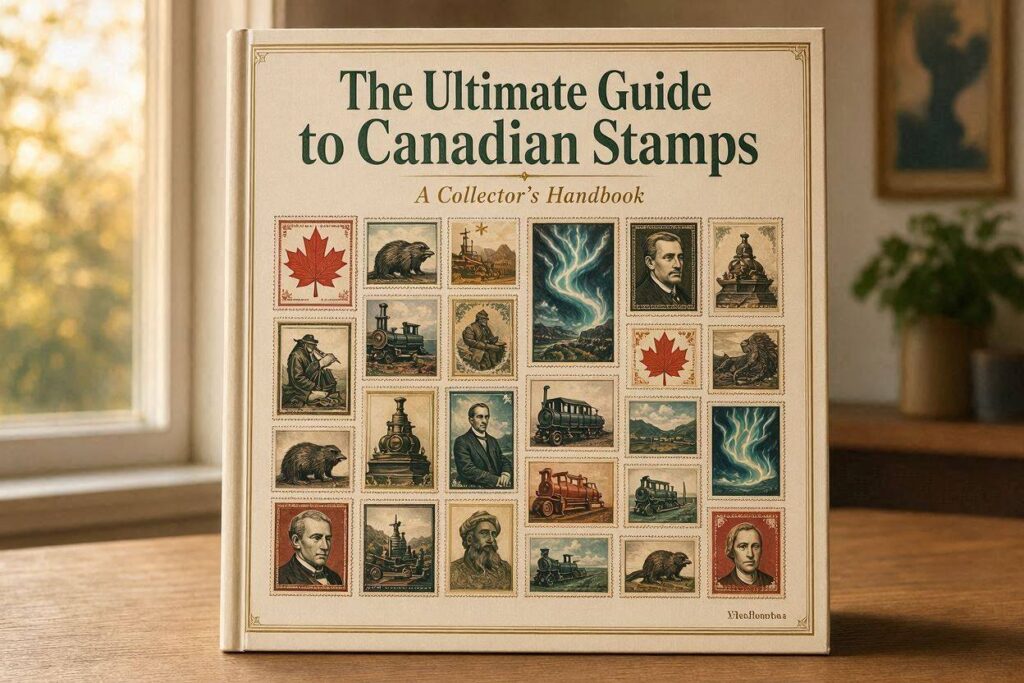
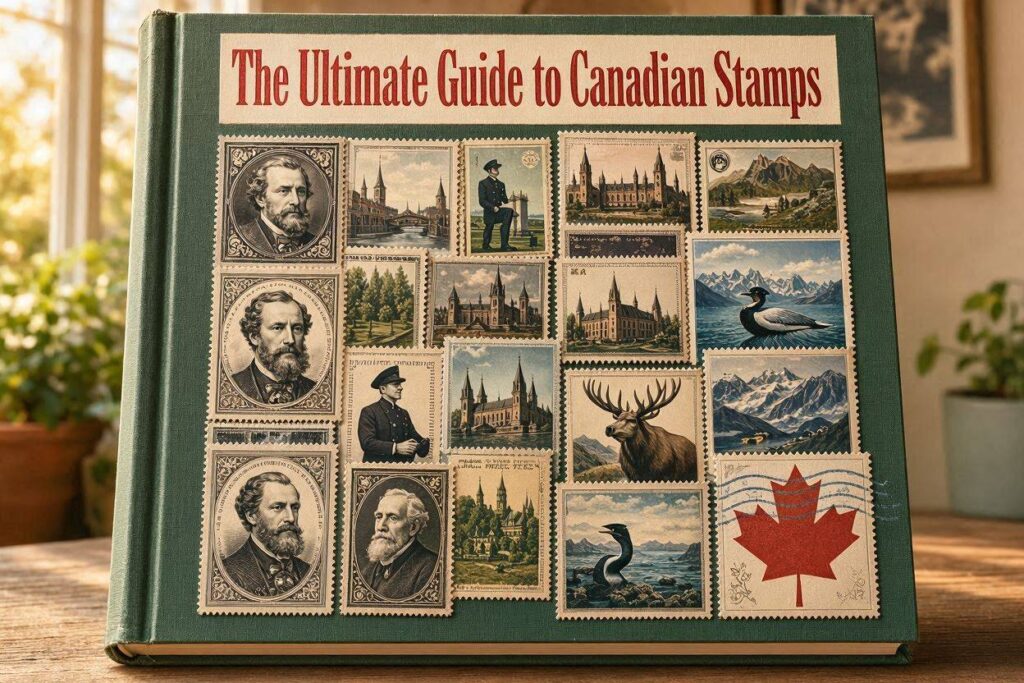
Canadian stamp collecting offers one of the most vibrant, rich, and historically fascinating journeys in world philately. From the iconic 1851 Three-Pence Beaver—the world’s first official postage stamp featuring an animal—to modern commemorative releases celebrating indigenous art and natural landscapes, Canadian stamps tell the story of a nation’s evolution.
Whether you are a seasoned philatelist looking for high-value rarities or a beginner curious about an old album passed down through your family, this guide covers everything you need to know about Canadian stamps, their value, and how to build a world-class collection.
A Brief History of Canadian Postage Stamps
Before Canada became a unified Dominion in 1867, individual British North American colonies issued their own stamps. Understanding these distinct eras is essential for navigating the world of Canadian philately.
The Colonial Era (1851–1867)
Canada’s postal history officially began on April 23, 1851, when the Province of Canada issued its very first postage stamp: the famous Three-Pence Beaver. Designed by Sir Sandford Fleming (the engineer who also invented worldwide standard time), this stamp broke international tradition. Instead of featuring a monarch or head of state, it pictured a beaver building a dam—a symbol of industry, endurance, and Canadian identity.
During this pre-Confederation period, other provinces issued their own stamps as well, including:
- New Brunswick
- Nova Scotia
- Prince Edward Island
- Newfoundland (which continued issuing its own stamps until joining Canada in 1949)
The Dominion Era (1867–1900)
Following Confederation in 1867, Canada released the Large Queens series in 1868, displaying Profile portraits of Queen Victoria. These were followed by the Small Queens series, which remained in print for decades due to their practicality and smaller physical size.
The Modern Era (1900–Present)
Throughout the 20th century, Canada Post expanded its design repertoire. Stamps began highlighting historical milestones, winter sports, aviation, wildlife, and royal visits. Today, Canada Post is recognized globally for producing innovative stamps with unique features like embossing, foil accents, and micro-printing.
The Holy Grails: Most Valuable and Rare Canadian Stamps
The Canadian stamp market is home to some of the rarest and most valuable philatelic treasures in North America. Here are the standout gems that collectors dream of acquiring:
1. The 1851 12d Black Queen Victoria
- Estimated Value: $\$200,000 – \$500,000+$ (depending on condition)
- Why It’s Rare: Issued in 1851 on handmade laid paper, this stamp had a very high face value (12 pence) for its time and was primarily used for expensive overseas mail. Only 1,450 copies were ever sold, making surviving examples exceptionally rare.
2. The 1868 2-Cent Large Queen on Laid Paper
- Estimated Value: Up to $\$250,000+$
- Why It’s Rare: The Large Queen series was supposed to be printed on standard wove paper. However, a tiny batch of 2-cent stamps was mistakenly printed on horizontally laid paper. Only three copies are known to exist today, making it one of Canada’s absolute holy grails.
3. The 1929 50-Cent “Bluenose” Stamp
- Estimated Value: $\$100 – \$3,000+$ (mint condition)
- Why It’s Famous: Widely considered by international collectors to be one of the most beautiful stamps ever engraved, the 50-cent Bluenose showcases the famous Nova Scotian fishing schooner battling rough ocean waves. While not impossibly rare, immaculate mint condition copies command significant premiums.
4. The 1959 St. Lawrence Seaway “Invert”
- Estimated Value: $\$10,000 – \$15,000$
- Why It’s Rare: Printed to commemorate the opening of the St. Lawrence Seaway, a printing error caused the red lettering (“Postes Postage 5c”) and the maple leaf emblems to be printed upside down. Only one sheet of 200 inverted stamps accidentally reached the public.
Key Factors That Determine Canadian Stamp Values
If you have inherited a collection or found older stamps, several crucial factors dictate whether a stamp is worth a few cents or thousands of dollars:
- Condition and Grade: Centering is critical. Stamps where the printed image is perfectly centered within the perforations command top prices.
- Gum Condition (Mint vs. Used): For unused stamps, original, undisturbed gum on the back (Mint Never Hinged / MNH) is significantly more valuable than stamps that have been attached to album pages with paper hinges.
- Rarity and Mintage: Lower print runs automatically increase potential value.
- Paper Type and Watermarks: Variations in paper (laid vs. wove paper, ribbed paper, or varying thicknesses) can drastically alter a stamp’s rarity.
- Errors and Varieties: Printing errors, color shifts, inverted elements, and missing perforations turn ordinary stamps into high-value collector items.
Pro Tip: Always consult a standard reference catalog like the Unitrade Specialized Catalogue of Canadian Stamps or the Scott Catalogue to properly identify paper varieties, perforation gauges, and shade differences.
Popular Themes for Collecting Canadian Stamps
One reason Canadian philately remains popular worldwide is its diversity. Collectors often organize their collections around specific themes rather than attempting to collect every single issue:
- Pre-Confederation Stamps: Collecting stamps from Newfoundland, Nova Scotia, and New Brunswick offers a distinct historical window into British North America.
- Wildlife and Nature: From the early 1851 Beaver to modern Arctic animal series, Canada’s natural heritage provides stunning visual appeal.
- Royalty and Heads of State: Tracking the reigns of Queen Victoria, King Edward VII, King George V, King George VI, and Queen Elizabeth II through definitive series.
- The “Bluenose” and Maritime History: Maritime transport, ships, and lighthouse series are hit categories among topical collectors.
Essential Tips for Starting Your Canadian Stamp Collection
- Use the Right Tools: Invest in specialized stamp tongs (never use regular tweezers, which can tear delicate perforations), a high-quality magnifying glass, a perforation gauge, and acid-free stockbooks or albums.
- Store Correctly: Keep your stamps in a cool, dry place away from direct sunlight and extreme humidity to preserve paper integrity and original gum.
- Join Local and National Clubs: Connect with groups such as the Royal Philatelic Society of Canada (RPSC) to gain access to expert advice, auctions, and trade networks.
- Buy from Reputable Dealers: Ensure high-value stamps come with certificates of authenticity from recognized expertizing bodies, such as the Vincent Graves Greene Philatelic Research Foundation.
Canadian stamp collecting combines historical mystery, art, and investment potential into a single rewarding hobby. Whether you are searching for rare pre-Confederation pence issues or building a complete modern collection, every Canadian stamp holds a piece of North American history worth preserving.