

In the history of British North American philately, few issues carry the distinct charm and specialized appeal of the Canada Registered Letter Stamps (RLS) issued between 1875 and 1893. Unlike standard postage stamps of the era, which were square or portrait-oriented and featured Queen Victoria’s profile, these stamps were uniquely long, horizontal, and strictly functional.
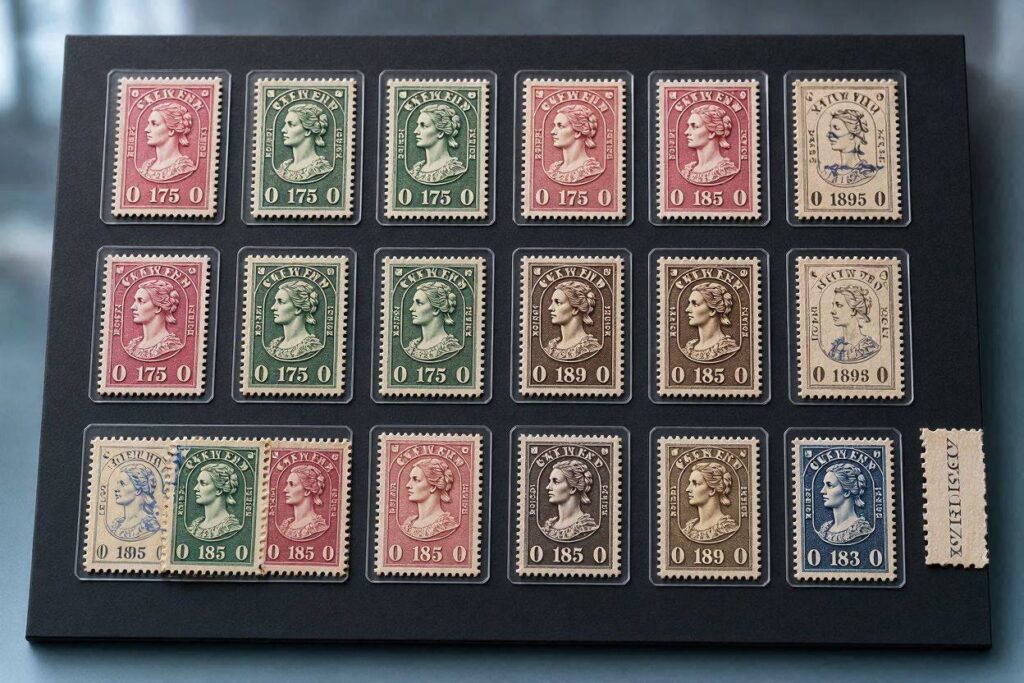
Issued to prepay the registration fee on valuable mail, this specialized issue represents a fascinating chapter in Canada Post’s development. Today, Registered Letter Stamps are among the most sought-after categories in Canadian back-of-the-book (BOB) philately.
The Historical Origin: Why Were Special Registration Stamps Issued?
Prior to 1875, Canadian postmasters collected registration fees in cash or allowed mailers to use standard definitive stamps (such as the Small Queens series) to pay for registration. However, accounting discrepancies and tracking difficulties forced the Post Office Department to introduce a separate, dedicated stamp issue solely for registration fees.
Printed by the British American Bank Note Company (BABNC) in Montreal and Ottawa, these stamps were placed on sale in November 1875. They remained in official use until 1893, when postal regulations allowed standard postage stamps to pay registration fees once again.
Breakdown of Denominations, Colors, and Rates
Canada issued three main denominations of Registered Letter Stamps to reflect changing postal rates and destinations:
1. The 2-Cent Value (Domestic Registration)
- Primary Colors: Orange, Rose-Pink, Vermilion, and Dull Red.
- Purpose: Prepaid the standard domestic registration fee within Canada.
- Collector Note: The 2-cent issue is the most common off-cover stamp because domestic registered mail volume was high. However, finding pristine Mint Never Hinged (MNH) examples with full, undisturbed original gum is challenging.
2. The 5-Cent Value (US & International Registration)
- Primary Colors: Green, Yellow-Green, and Deep Blue-Green.
- Purpose: Introduced to pay the registration fee on letters sent to the United States and foreign countries under Universal Postal Union (UPU) agreements.
- Collector Note: Because foreign registered mail volume was significantly lower than domestic mail, genuine 5-cent covers and high-grade mint copies carry a substantial market premium.
3. The 8-Cent Value (Transatlantic & UPU Rate)
- Primary Colors: Blue, Bright Blue, and Dark Blue.
- Purpose: Issued in 1876 to cover combined registration and postage rates for heavy overseas mail to the United Kingdom and Europe.
- Collector Note: The 8-cent blue RLS is widely considered the key stamp of the series. Clean, well-centered copies command top prices at auction.
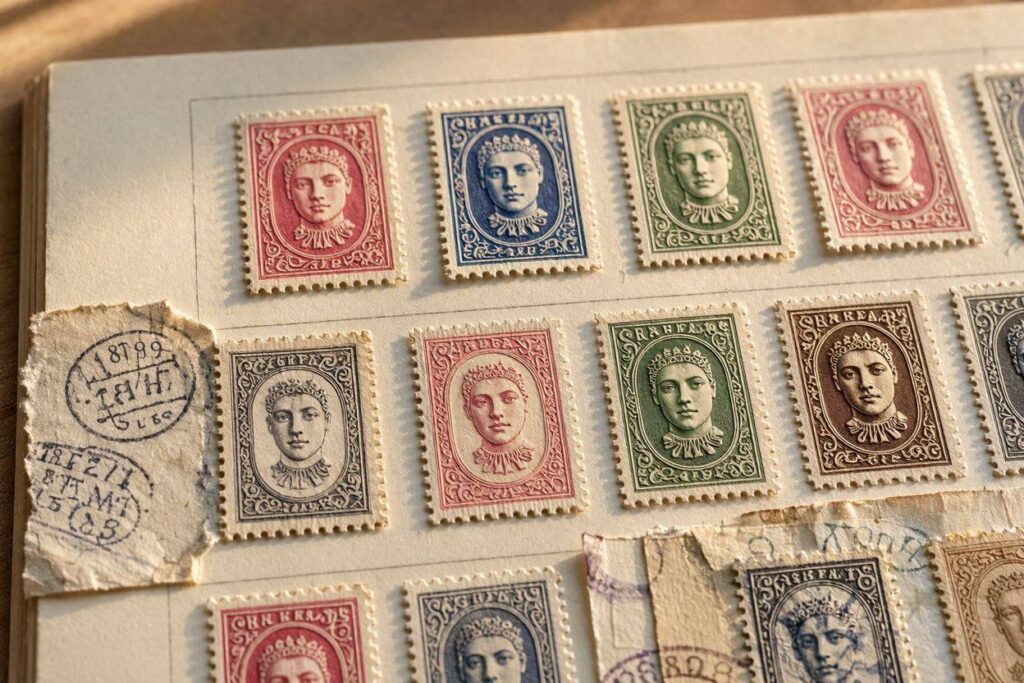
Key Factors That Determine Rarity and Valuation
Evaluating Canada Registered Letter Stamps requires paying close attention to shades, paper varieties, perforation differences, and postal usage.
+-------------------------------------------------------------------------------+
|                       VALUATION & IDENTIFICATION MATRIX                       |
+-------------------+-----------------------+-----------------------------------+
| DENOMINATION      | SCOTT / UNITRADE #    | KEY VALUE DRIVERS                 |
+-------------------+-----------------------+-----------------------------------+
| 2-Cent Orange     | F1                    | Paper shades, latent re-entries,  |
|                   |                       | intact margin imprints.           |
+-------------------+-----------------------+-----------------------------------+
| 5-Cent Green      | F2                    | High-grade centering, clear       |
|                   |                       | town cancellations, cover usage.  |
+-------------------+-----------------------+-----------------------------------+
| 8-Cent Blue       | F3                    | MNH gum condition, bright shade,  |
|                   |                       | genuine destination postmarks.    |
+-------------------+-----------------------+-----------------------------------+
1. Paper and Perforation Varieties
Throughout their 18-year production run, the British American Bank Note Company used various paper stocks and perforation machines:
- Perforations: RLS stamps are commonly found in Perf 12, but rare sub-varieties such as Perf 12 x 11.5 or Perf 11.5 x 12 exist.
- Paper Types: Look out for soft porous paper versus hard wove paper. Hard wove paper printings tend to show sharper engraving lines.
2. Plate Re-Entries and Printing Errors
Because plate engraving was done manually, several notable re-entries (double impressions of the engraved design) occurred on the 2-cent and 5-cent plates. Specialized collectors actively search for:
- Major Re-entries: Visible doubling in the words “CANADA”, “REGISTERED”, or the numeric corner counters.
- Color Errors & Shades: Extremely light or intensely deep shades often fetch higher values when certified.
3. “On Cover” Postal History Premium
Stamps removed from their original envelopes lose a major part of their historical context. A Registered Letter Stamp remaining on its original envelope (cover)—especially when combined with Small Queens definitive stamps—can be worth 3x to 10x more than the loose stamp alone.
How to Collect and Identify Authentic Registered Letter Stamps
If you are expanding your Canadian back-of-the-book collection, follow these steps to avoid forged cancels or altered stamps:
- Check for Pen Cancels: Many 19th-century postmasters used ink pen lines to cancel registered stamps. While postally valid, pen-canceled copies sell at a discount compared to light, circular town postmarks (CDS).
- Examine Centering carefully: Due to narrow sheet margins and primitive perforation wheels, many 1875–1893 stamps have perforations cutting directly into the outer frame design. Perfectly centered copies with wide margins are exceptionally rare.
- Reference Cataloging: Use the Unitrade Specialized Catalogue of Canadian Stamps (F-series listings) for detailed pricing breakdowns on shades, imprints, and block combinations.
- Get High-Value Rarities Certified: Rare shade varieties, 8-cent blue blocks, or unusual covers should be expertized by recognized authorities like the Vincent Graves Greene Philatelic Research Foundation.
The 1875–1893 Canada Registered Letter Stamp series offers an exceptional blend of historical depth, distinct design, and investment potential. Whether you focus on basic three-stamp sets or dive deep into specialized plate varieties and postal history covers, these long horizontal classics remain a proud cornerstone of Canadian philately.