

In the modern commerce landscape, shipping is no longer just a marginal operational expense—it is a critical battleground for margin preservation. Postage Inflation Hedging is the strategic practice of mitigating financial exposure to rising postal, courier, and freight rates.
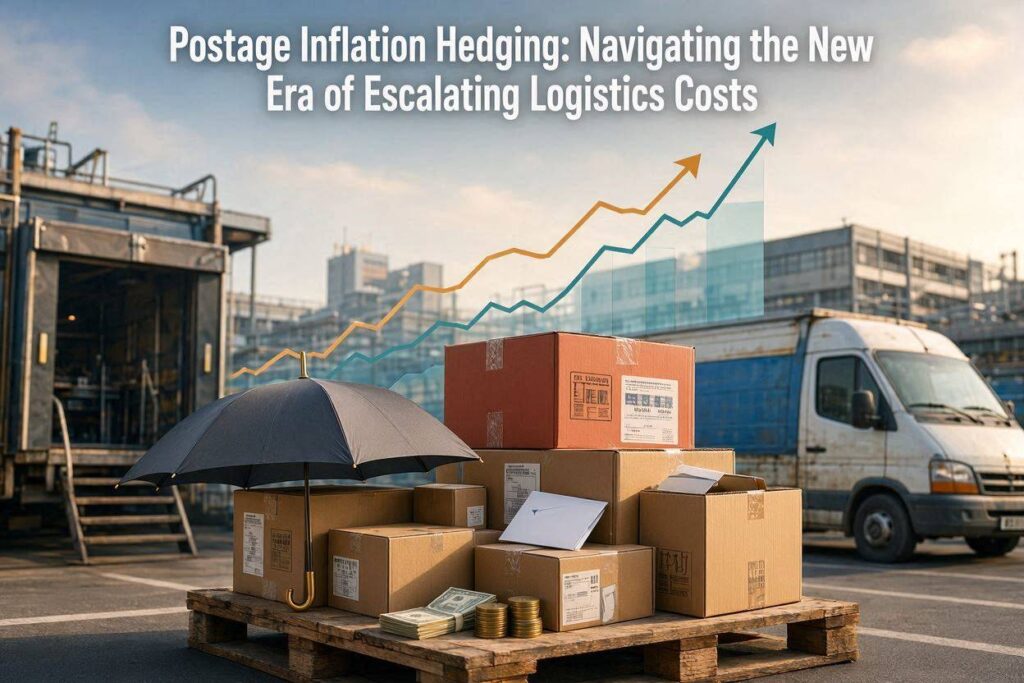
As major carriers (such as USPS, FedEx, UPS, and DHL) shift from predictable annual price hikes to volatile, high-frequency rate adjustments, businesses can no longer rely on passive budgeting. Hedging against postage inflation requires an active, data-driven framework to protect bottom-line profitability.
1. The New Landscape of Postage Inflation Challenges
While businesses historically budgeted for a single, predictable annual rate hike, today’s logistics environment presents complex, multi-layered challenges that require advanced mitigation strategies.
* Challenge 1: The Rise of Dynamic & Algorithmic Surcharging
Carriers are increasingly moving away from static rate cards toward dynamic, algorithmic pricing models.
- The Issue: Fuel adjusters, seasonal peak surcharges, and emergency capacity fees are now calculated and updated on a weekly or monthly basis.
- The Impact: This dynamic shifting makes long-term shipping budget forecasting nearly impossible, as costs fluctuate in real-time based on carrier capacity and energy markets.
* Challenge 2: In-Transit AI Audits and Retroactive Re-Billing
Carriers have deployed advanced AI-driven spatial scanners at sorting hubs to measure parcels instantly.
- The Issue: If a box bulges by even half an inch, or if the weight is off by a fraction of an ounce, the carrier automatically re-rates the parcel at a much higher tier.
- The Impact: Merchants face unexpected, retroactive “shipping adjustment” charges on their invoices weeks after a product has been delivered, directly eroding the margins of completed sales.
* Challenge 3: The Green Premium & Sustainability Surcharges
With global pressure to reduce carbon footprints, carriers are investing heavily in electric vehicle (EV) fleets and sustainable aviation fuel (SAF).
- The Issue: To fund these capital-intensive transitions, carriers are introducing mandatory or semi-mandatory “green surcharges.”
- The Impact: Shippers must pay a premium to meet sustainability standards, with virtually no ability to negotiate these environmental fees.
* Challenge 4: The Liquidity Trap of Traditional “Paper Hedging”
Historically, a common hedge was stockpiling pre-paid postage assets (like “Forever Stamps” or bulk-purchased meter balances).
- The Issue: In a high-interest-rate environment, locking up hundreds of thousands of dollars in non-liquid postage inventory creates a severe opportunity cost.
- The Impact: Businesses freeze precious working capital that could otherwise yield higher returns if invested in inventory, product development, or marketing.
* Challenge 5: Hyper-Regionalization Penalties
Carriers are optimizing their networks to favor short-distance shipments, heavily penalizing long-distance transit.
- The Issue: Shipping across multiple zones (e.g., East Coast to West Coast) has become exponentially more expensive than shipping locally (Zones 1 and 2).
- The Impact: Businesses operating out of a single centralized warehouse are hit with massive zone-based inflation multipliers.
* Challenge 6: The Reverse Logistics (Returns) Inflation Loop
Returns are an inevitable part of modern retail, but the cost to bring a product back is rising faster than outbound shipping.
- The Issue: Return labels are often purchased at retail or standard commercial rates without the volume discounts applied to outbound shipments.
- The Impact: A high return rate combined with postage inflation creates a compounding financial drain, sometimes making it cheaper to write off returned inventory entirely rather than ship it back.
2. Modern Tactical Frameworks to Hedge Postage Inflation
To offset these emerging challenges, businesses must deploy a combination of operational adjustments, technological tools, and logistical diversification.
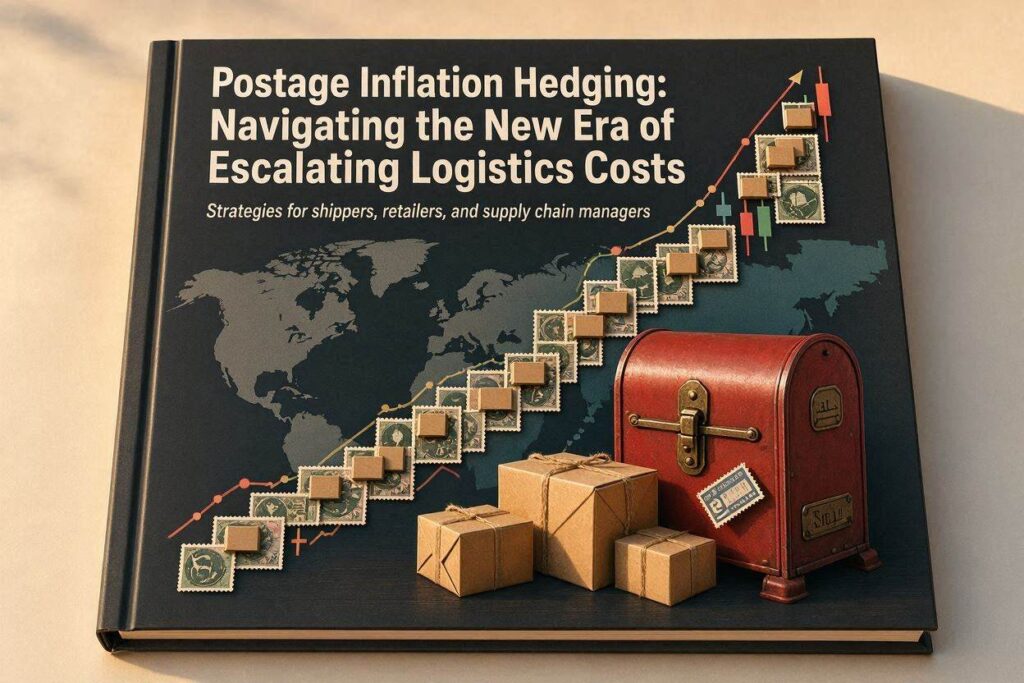
* Strategy A: Zone Skipping (Consolidation and Injection)
Instead of handing individual parcels to a national carrier at origin, businesses can aggregate shipments bound for a specific region.
- How it works: Palletize thousands of regional orders and truck them via less-than-truckload (LTL) freight directly to a regional postal hub (e.g., a USPS Sectional Center Facility).
- The Hedge: You bypass the high-cost long-distance zones, paying only local “last-mile” postage rates.
* Strategy B: Packaging Dematerialization (“The War on Air”)
Dimensional (DIM) weight pricing means carriers charge based on the volume of space a box occupies, not just its actual weight.
- How it works: Transition from standard cardboard boxes to custom-fit packaging, poly mailers, or auto-bagging technology that shrinks around the product.
- The Hedge: Eliminating empty space reduces the dimensional weight profile, moving shipments into lower pricing tiers and shielding them from DIM-rate inflation.
* Strategy C: Automated Multi-Carrier Rate Auditing
Relying on a single carrier contract leaves a business highly vulnerable to targeted rate increases.
- How it works: Implement multi-carrier shipping APIs that instantly compare rates across local regional carriers, national networks, and hybrid postal partners for every single package shipped.
- The Hedge: By automatically routing each parcel through the lowest-cost provider in real-time, you insulate your logistics from any single carrier’s sudden rate hikes.
* Strategy D: Leveraging Hybrid Postal Services
Hybrid networks utilize private carriers for long-haul transit and sorting, then inject the parcels into public postal systems for the final mile.
- How it works: Use services like UPS Mail Innovations or DHL eCommerce to handle bulk movement, letting the local post office execute the final delivery.
- The Hedge: This combines the tracking and efficiency of private networks with the cost-effective residential reach of public postal systems.
3. Key Performance Indicators (KPIs) for Postage Hedging
To evaluate the success of your postage hedging strategies, monitor the following metrics:
| Metric | Calculation / Description | Target Objective |
| Effective Cost Per Piece (ECPP) | Total shipping spend divided by total units shipped. | Keep the annual increase below the benchmark carrier general rate increase (GRI). |
| Dimensional Density Ratio | Actual Weight divided by Dimensional Weight. | Achieve a ratio close to 1:1 to minimize charges for shipped air. |
| Zone Coefficient Score | The average zone distance traveled per parcel. | Minimize this number by distributing inventory closer to demand hubs. |
| Surcharge Contribution Rate | Surcharge spend divided by total shipping spend. | Keep base rates high and variable surcharges under 15% of total spend. |